


Menarche Support for Parents How to Talk Openly and Create a Caring Home

A child’s first period can arrive with curiosity, pride, confusion, fear, or all of these at once. For parents, it can feel just as emotional. One moment, you are buying school shoes and checking homework. The next, you are helping your child understand a major body change that marks the start of a new stage of growing up.
Menarche is the medical term for a child’s first menstrual period. It is a normal part of puberty, but “normal” does not always mean easy. Many children receive mixed messages about periods, especially when menstruation is treated as private, embarrassing, or something to hide. Parents can make a deep difference by offering accurate information, calm reassurance, and practical support before the first period arrives.
This guide offers menarche support for parents who want to talk openly, answer questions honestly, and create a home where menstruation is understood as a healthy body process.
This article is for general information only and is not a substitute for medical advice. Speak with a paediatrician, gynaecologist, or qualified health professional if there are concerns about your child’s health.

What menarche means and why it matters
Menarche usually happens during puberty, often between the ages of 10 and 15, though timing can vary. It is one sign that the reproductive system is maturing. Before a first period, many children notice other changes such as breast development, growth spurts, body hair, body odour, mood changes, and vaginal discharge.
The first few periods may not follow a predictable pattern. A child may bleed for a few days, then not get another period for several weeks or even a few months. Flow can be light at first, and the colour may range from bright red to brown. This can worry children who expect periods to look a certain way, especially if their only information comes from classmates, films, or the internet.
Menarche is significant for more than biological reasons. It can affect a child’s sense of identity, privacy, hygiene, body image, sports participation, school comfort, and emotional wellbeing. Some children feel excited because they see it as a sign of growing up. Others may feel anxious, especially if the period starts at school, during travel, or before they were prepared.
Cultural beliefs can also shape the experience. In many Indian homes, menstruation may be linked to rules around food, prayer, clothing, movement, or social behaviour. Some families treat the first period as a milestone. Others avoid talking about it. Children can feel confused when they hear that periods are natural but also see them treated as shameful or dirty.
Parents do not need to have perfect words. What matters most is the message underneath the words:
“Your body is changing in a normal way. You are safe. You can ask me anything.”
That one message can reduce fear and build trust.
How to talk openly before the first period
The best time to talk about menstruation is before menarche happens. A child who already knows what a period is will be less likely to panic when bleeding begins.
Start small. One serious “big talk” may feel awkward for both parent and child. Short, repeated conversations work better. You might talk while folding laundry, packing a school bag, buying toiletries, or answering a question that comes up naturally.
Try clear, simple language:
“Periods are a normal part of puberty. Once a month, the uterus builds a lining. If the body does not need it, the lining comes out as blood through the vagina.”
This explanation is accurate without being overwhelming. Use correct body words such as vagina, uterus, period, and menstruation. Correct words help children describe symptoms, ask questions, and seek help when needed.
Keep the tone calm and matter-of-fact
Children often read a parent’s face before they absorb the words. If a parent sounds nervous, disgusted, or embarrassed, the child may think menstruation is something bad. A calm tone says, “This is manageable.”
Helpful phrases include:
“Periods are normal, and we can plan for them.”
“You can tell me if you see blood on your underwear.”
“You will not be in trouble if your clothes or bedsheet get stained.”
“Lots of people menstruate, and everyone learns with time.”
“If you feel shy, we can still talk privately.”
Include all children in the conversation
Even children who may not menstruate should learn about periods. Siblings, classmates, and friends all benefit from understanding menstruation. It reduces teasing, myths, and stigma.
At the same time, be sensitive to children who menstruate but may not identify as girls. Some transgender, non-binary, or gender-questioning children may experience periods with extra discomfort. Use language that fits your child and lets them know their feelings are valid.
Invite questions without forcing them
Some children ask direct questions. Others shut down when they feel put on the spot. Instead of saying, “Do you have any questions?” try:
“I know this may feel like a lot. If a question comes later, you can ask me anytime.”
You can also offer choices:
“Would you rather talk now, read something together, or keep a small period kit ready first?”
Choice gives the child a sense of control.
How to create a supportive home environment
A caring home does not treat periods as a crisis. It treats them as a normal need, like bathing, eating, or resting.
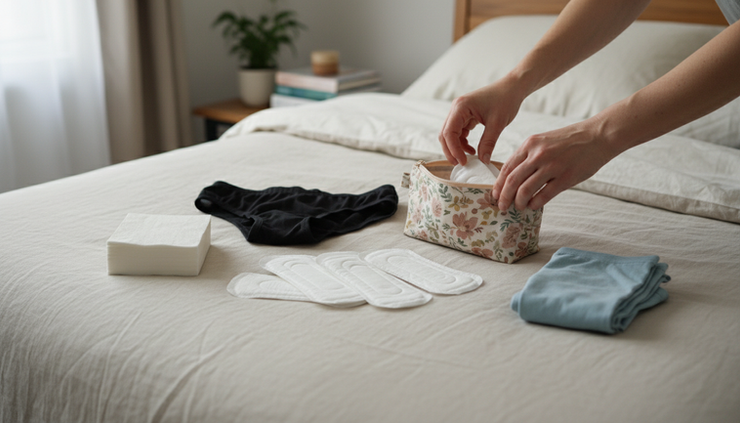
Start by keeping supplies easy to find. Children should not have to ask every time they need a pad or clean underwear. Store menstrual products in the bathroom, bedroom, or a clearly labelled basket. If privacy matters, use a plain pouch or box.
A basic first-period kit can include:
Sanitary pads in a size suitable for younger bodies
A spare pair of underwear
Tissues or toilet paper
A small plastic or washable cloth bag for stained underwear
A note with simple steps for what to do
A small calendar or period tracking card
In India, many children first use sanitary pads because they are widely available and easier to learn. As they grow, they may want to explore period underwear, tampons, or menstrual cups. There is no need to rush. Comfort, safety, and correct use matter more than the product itself.
Make room for privacy and dignity
Privacy becomes more important during puberty. A child may not want siblings to know when their period starts. They may not want jokes from relatives or questions asked in front of guests.
Respecting privacy can sound like:
“I will not tell anyone unless you want me to.”
If there is a family custom around the first period, ask the child how they feel about it where possible. Celebration may comfort one child and embarrass another. Some children want a special meal or quiet recognition. Others want no attention at all.
Handle stains without shame
Leaks happen. Stains happen. They can happen at school, in bed, while playing sport, or during travel. The parent’s reaction can become a lasting memory.
Avoid scolding, sighing, or making the child feel careless. Instead, say:
“That happens to many people. Let’s rinse it with cold water and change.”
Teach practical stain care. Cold water usually helps more than hot water for fresh blood stains. Keep dark-coloured period underwear or night shorts available if that helps the child sleep better.
Support rest, food, and daily life
Some children have cramps, tiredness, headaches, loose stools, or mood changes around their period. Mild discomfort is common, but pain should not be dismissed.
Support can include:
A hot water bag or warm compress
Extra water
Simple meals and snacks
Gentle stretching or rest
Permission to slow down without being treated as fragile
School, sports, dance, swimming, and religious or social activities may need practical planning. Help the child learn what feels comfortable for their body. Avoid suggesting that menstruation makes them weak or incapable.

Common concerns children may have and how to answer them
Children often need direct answers to questions adults may find obvious. Answer honestly, but keep the response suitable for the child’s age and understanding.
“Am I hurt?”
A child who sees blood may think something is wrong. Reassure them first.
“You are not hurt. This is period blood, and it is a normal part of puberty. I know it may look scary the first time.”
Then help them clean up, put on a pad, and change clothes if needed.
“Will everyone know?”
This fear is very common, especially at school. Explain that most people will not know unless the child tells them. Show how to place a pad properly, how often to check it, and what to do if they need help.
It may help to identify a trusted adult at school, such as a class teacher, school nurse, counsellor, or female staff member. If the child is comfortable, parents can also inform the school privately that the child may need support.
“How much blood is normal?”
Explain that periods can be light, medium, or heavy. In the first year or two, the cycle may be irregular. Still, children should know when to ask for help.
Speak to a doctor if:
Bleeding is so heavy that pads soak very quickly
Period pain stops the child from normal activities
Bleeding lasts longer than usual for several cycles
There is dizziness, fainting, or extreme tiredness
Periods start very early, such as before age 8
There is no period by around age 15, or puberty seems delayed
These signs do not always mean something serious, but they deserve medical guidance.
“Can I bathe or wash my hair?”
Yes. Bathing during periods is safe and hygienic. Warm water may also ease cramps. If a child has heard rules that say otherwise, answer gently. You do not need to insult family beliefs, but you can separate health facts from customs.
“You can bathe during your period. It helps you feel clean. Some families follow certain customs, but medically, bathing is safe.”
“Can I go to school or play?”
In most cases, yes. Menstruation alone does not mean a child must stay home. If the child feels well, they can study, play, cycle, dance, or take part in physical education. If cramps or heavy bleeding make school hard, offer support and seek medical advice if it keeps happening.
“Does this mean I can get pregnant?”
This question can feel uncomfortable, but it deserves a clear answer. Menarche means the body is becoming capable of pregnancy, though cycles may take time to become regular. This is also a good moment to start age-appropriate conversations about body boundaries, consent, privacy, and safe touch.
Keep it simple:
“A period is one sign that the body is maturing. It also means we should keep talking about body safety, private parts, and who is allowed to touch your body. You can always tell me if anyone makes you uncomfortable.”
This conversation protects children. It does not take away their innocence.
Education and emotional support go together
Information helps children know what is happening. Emotional support helps them feel they can handle it. Both are needed.
A child may understand the science and still feel upset. Another may seem calm but secretly worry about staining clothes or being teased. Watch for changes in mood, sleep, appetite, school attendance, or body confidence. Puberty can be a sensitive time, and menstruation may bring feelings the child cannot easily name.
Build education into ordinary life. Keep a puberty book at home. Watch a simple educational video together from a trusted health source. Use diagrams if they help. Teach the child how to mark dates on a calendar, not to pressure them into perfect tracking, but to notice patterns over time.
Parents can also challenge shame through everyday behaviour:
Buy period products without hiding them
Avoid calling periods “dirty”
Do not tease children about mood changes
Include fathers and other caregivers in respectful support
Make sure siblings understand privacy and kindness
Speak about menstruation as health, not as a secret
Fathers, grandfathers, uncles, and male caregivers can play an important role too. A child may remember who stayed calm, who bought pads without awkwardness, and who treated them with dignity. Menstruation should not be treated as only a “mother’s topic”.

What to do when the first period arrives
When menarche happens, keep the moment steady. Even if you feel emotional, begin with reassurance.
A simple response can be:
“Thank you for telling me. This is your first period. You are okay, and I will help you.”
Then move step by step:
Help the child wash their hands and clean up.
Show them how to place a pad on the underwear.
Explain when to change it, usually every few hours or sooner if it feels full.
Put stained clothes or underwear to soak in cold water.
Offer water, food, rest, or a warm compress if they have cramps.
Ask whether they want privacy, a hug, or quiet company.
Avoid turning the moment into a public announcement unless the child wants that. Even happy attention can feel overwhelming.
Later, when things are calm, talk about what happened. Ask what felt confusing or scary. Check whether they need supplies for school. If your child uses a school bag, place a small pouch inside and show them where it is.
This is also a good time to explain disposal. Wrap used pads in paper or the wrapper from a new pad and place them in a bin. Do not flush pads, as they can block plumbing. If your area has separate waste instructions, follow them.
A caring home makes menarche less scary
Menarche is not only a body event. It is a trust moment. A child learns whether their changing body will be met with shame or support, panic or calm, silence or honest conversation.
Parents do not need to know every answer. They need to be approachable. They need to say, “Let’s find out together,” when they are unsure. They need to keep supplies ready, protect privacy, address pain seriously, and remind the child that menstruation is a normal part of life.
The first period may be messy, emotional, or unexpected. With education and steady support, it can also become a moment of confidence. The goal is simple: help the child feel informed, cared for, and never alone in their own body.



टिप्पणियां