


Slip Disc Relief: Symptoms, Causes, Prevention, Treatments, Diets, and Exercises

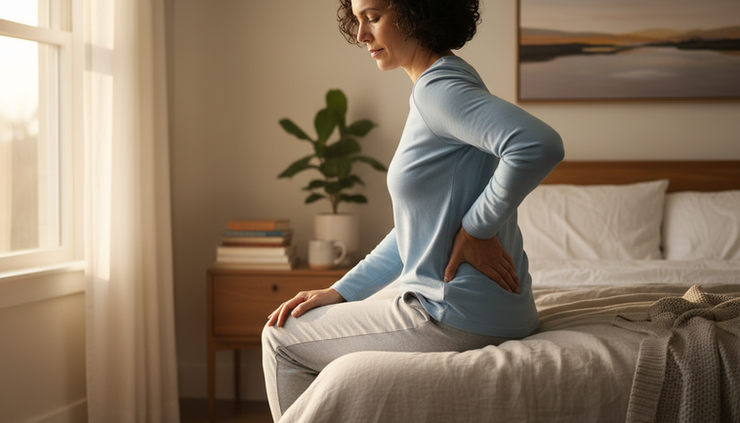
Back pain can stop ordinary life quickly. Getting out of bed feels hard, sitting through work becomes painful, and a simple cough may send pain down the leg. One common reason is a “slip disc”, though the disc does not actually slip out of place. It bulges, tears, or presses on nearby nerves.
A slip disc can sound frightening, but many people recover well with the right care, movement, rest, and follow-up habits. This guide explains what happens in the spine, how to spot symptoms, what causes disc problems, and what can help you recover safely.
This article is for general information only. It does not replace medical advice, diagnosis, or treatment from a qualified doctor or physiotherapist.
What a slip disc is and how it feels
The spine has small bones called vertebrae stacked one above another. Between them sit soft cushions called intervertebral discs. Each disc has a tough outer ring and a softer gel-like centre. These discs absorb shock, allow bending, and help the spine move smoothly.
A slip disc, also called a herniated disc or prolapsed disc, happens when the inner part pushes out through a weak or torn outer ring. If this bulge touches or irritates a nerve, pain can travel beyond the back.
Slip discs most often affect the lower back, especially the lumbar spine. They can also occur in the neck. Pain in the middle back is less common, but possible.
Common symptoms of a slip disc
Symptoms depend on where the disc problem is and whether a nerve is affected. Some people have a disc bulge on a scan and feel no pain. Others have sharp symptoms even with a small bulge.
Common signs include:
Lower back pain
Pain may feel dull, deep, sharp, or burning. It can worsen after sitting, bending, lifting, or coughing.
Pain travelling down one leg
This is often called sciatica. It may run from the lower back to the buttock, thigh, calf, or foot.
Numbness or tingling
A compressed nerve can cause pins and needles, usually in the leg or foot.
Muscle weakness
The foot may drag, climbing stairs may feel harder, or the leg may feel less steady.
Neck and arm symptoms
A cervical disc problem may cause neck pain, shoulder pain, arm tingling, or weakness in the hand.
Pain that changes with position
Sitting may worsen symptoms, while walking slowly or lying in a supported position may ease them.
Warning signs that need urgent care
Seek urgent medical help if back pain comes with:
Loss of bladder or bowel control
Numbness around the groin or inner thighs
Sudden major weakness in the leg or foot
Fever, unexplained weight loss, or pain after a fall or accident
Severe pain that does not improve with rest or prescribed medicine
These symptoms are not common, but they need prompt assessment.
Why slip discs happen
A slip disc rarely has just one cause. It usually develops from a mix of ageing, repeated strain, weak support muscles, and sudden overload.
As people age, discs lose some water and flexibility. This makes the outer ring more likely to crack. Then a sudden movement, repeated bending, or a heavy lift can trigger pain.
Common causes and risk factors
Cause or risk factor | How it can affect the spine |
Poor lifting technique | Bending and twisting under load can strain discs |
Long sitting hours | Sitting increases pressure on the lower back, especially with poor posture |
Weak core and hip muscles | The spine takes more load when support muscles are weak |
Excess body weight | Extra load can increase stress on discs and joints |
Smoking | It may reduce blood flow and slow tissue healing |
Sedentary lifestyle | Stiffness and weak muscles raise the risk of injury |
Repeated vibration | Long driving hours on rough roads can irritate the spine |
Sudden awkward movement | A twist, jerk, or fall can trigger symptoms |
Slip disc pain is not always caused by one dramatic injury. Many people recall only a simple movement, such as picking up a bucket, lifting a child, or bending to tie shoelaces.

How to prevent slip discs in daily life
Prevention does not mean avoiding movement. The spine needs movement to stay healthy. The goal is to reduce repeated strain, build strength, and use the body more efficiently.
Lift with the hips and legs
When lifting something from the floor, move close to the object. Bend the knees and hips, keep the object near the body, and avoid twisting while lifting.
For heavy items, ask for help or split the load. This matters for daily Indian settings too, such as lifting gas cylinders, packed grain bags, water cans, suitcases, or buckets.
Break long sitting periods
Sitting for hours can make the back stiff and increase disc pressure. Stand, walk, or stretch for a minute every 30 to 45 minutes. This is especially useful for people who drive long distances or work on laptops.
A simple routine helps:
Stand up
Walk for 1 minute
Gently extend the back with hands on hips
Sit again with both feet supported
Improve sleep and sitting support
Use a mattress that feels supportive, not too soft. While sleeping on the side, placing a pillow between the knees may reduce twisting. While lying on the back, a pillow under the knees can ease pressure on the lower back.
For sitting, keep the hips slightly higher than the knees if possible. Use a small rolled towel behind the lower back if the chair has poor support.
Build strength before pain begins
Strong muscles work like a natural belt around the spine. The core, glutes, hips, and back muscles all share the load. Walking, swimming, yoga under guidance, and strength training can be useful when done correctly.
Start slowly. Sudden intense workouts after months of inactivity can irritate the back.
Maintain a healthy weight
Even small weight loss can reduce stress on the spine in people carrying excess weight. Focus on steady, sustainable habits rather than crash diets. A balanced Indian meal pattern with dal, curd, vegetables, fruits, millets, rice, roti, eggs, fish, or lean meats can support both weight and recovery goals.
Treatment options that can support recovery
Most slip disc cases improve without surgery. Treatment usually starts with pain control, careful activity, physiotherapy, and time. The right plan depends on pain severity, nerve symptoms, work needs, age, and overall health.
Medical treatments
A doctor may suggest one or more of the following:
Treatment | When it may help |
Short rest | Useful for severe pain in the first few days, but long bed rest can slow recovery |
Pain-relief medicines | May reduce pain and allow gentle movement |
Anti-inflammatory medicines | Can help when inflammation contributes to pain |
Muscle relaxants | Sometimes used for painful spasms |
Nerve pain medicines | May help burning, tingling, or shooting pain |
Physiotherapy | Builds strength, improves movement, and teaches safer habits |
Epidural steroid injection | May reduce nerve inflammation in selected cases |
Surgery | Considered for severe weakness, serious nerve compression, or pain not improving with conservative care |
Avoid self-medicating, especially with strong painkillers or repeated anti-inflammatory medicines. They can affect the stomach, kidneys, liver, blood pressure, or other conditions.
Physiotherapy and rehabilitation
Physiotherapy often plays a central role. A trained physiotherapist may assess posture, walking, leg strength, nerve irritation, hip mobility, and core control.
A rehab plan may include:
Gentle mobility work
Nerve gliding exercises
Core and hip strengthening
Posture and lifting training
Heat or cold therapy when suitable
A gradual return to work, sport, and household tasks
The best exercises are chosen based on the person’s symptoms. For example, some people feel better with gentle back extension, while others need a different approach. Pain that spreads farther down the leg during an exercise is a sign to stop and get guidance.
Alternative and supportive therapies
Some people find relief from therapies used alongside medical care. These should not replace urgent treatment when nerve symptoms are severe.
Options may include:
Yoga therapy
Gentle, supervised yoga can improve mobility, breathing, and body awareness. Avoid deep forward bends and strong twists during pain flare-ups.
Acupuncture
Some people report short-term pain relief, though results vary.
Massage
Massage may ease muscle tightness around the back and hips. It does not push a disc back in place.
Ayurvedic support
Some treatments focus on pain relief, oil application, or lifestyle changes. Choose qualified practitioners and inform your doctor about any oral medicines or herbal preparations.
Heat and cold therapy
Cold packs may help in the early painful stage. Heat can relax tight muscles later. Use either for 15 to 20 minutes, with a cloth barrier to protect the skin.
Follow-up diet to support healing
Food cannot push a disc back into place, but a good diet can support tissue repair, muscle strength, bone health, and weight management. It also helps control inflammation and improves energy during rehabilitation.
What to include regularly
Nutrient focus | Food examples common in India |
Protein | Dal, chana, rajma, sprouts, paneer, curd, eggs, fish, chicken, tofu |
Calcium | Milk, curd, paneer, ragi, sesame seeds, leafy greens |
Vitamin D support | Safe sunlight exposure, fortified foods, supplements if prescribed |
Omega-3 fats | Fatty fish, walnuts, flaxseeds, chia seeds |
Fibre | Vegetables, fruits, whole grains, millets, beans |
Hydration | Water, coconut water, soups, buttermilk without excess salt |
Protein is especially useful because rehab depends on muscle repair and strengthening. Many adults under-eat protein, especially during recovery. Adding one protein source to each meal can make a real difference.
A simple recovery plate
A balanced lunch or dinner can look like this:
Half the plate with cooked vegetables, salad, or both
One quarter with protein such as dal, curd, paneer, egg, fish, chicken, chana, or tofu
One quarter with rice, roti, millet, or another grain
A small amount of healthy fat from nuts, seeds, groundnut, mustard oil, or ghee
Foods and habits to limit
Try to reduce:
Sugary drinks and sweets
Frequent fried snacks
Excess alcohol
Smoking or tobacco in any form
Very low-calorie crash diets
Ultra-processed packaged foods eaten often
Constipation can worsen back pain because straining increases pressure. Fibre, fluids, fruits such as papaya or guava, vegetables, and regular walking can help.
Exercises that strengthen the back and reduce future risk
Exercise should feel controlled, not forced. During a flare-up, the aim is to calm pain and keep gentle movement. Later, the goal shifts to strength, endurance, and confidence.
Stop any exercise that causes increasing leg pain, numbness, or weakness. If symptoms are severe, get personalised guidance before starting.
Gentle exercises during early recovery
These are commonly used, but they may not suit everyone.
1. Diaphragmatic breathing
Lie on the back with knees bent. Place one hand on the belly. Breathe in slowly so the belly rises, then breathe out gently.
Do 5 to 10 breaths. This relaxes guarding muscles and helps reduce tension.
2. Pelvic tilts
Lie on the back with knees bent. Gently flatten the lower back towards the floor, then release.
Do 8 to 12 slow repetitions. Keep the movement small.
3. Short walks
Walk on flat ground at an easy pace. Start with 5 to 10 minutes if pain allows. Increase slowly.
Walking often helps maintain circulation and reduces stiffness.
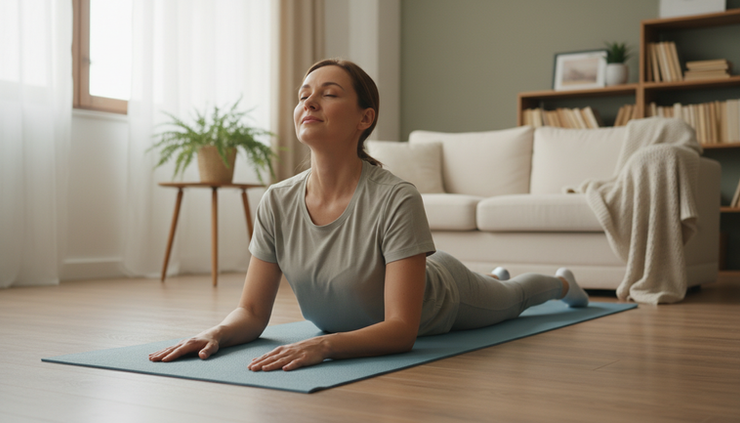
4. Prone lying or gentle sphinx
Lie on the stomach. If comfortable, come up onto the elbows and keep the hips relaxed.
Hold for 10 to 20 seconds. Stop if leg pain worsens.
Strength exercises for prevention
Once acute pain settles, strengthening becomes more useful.
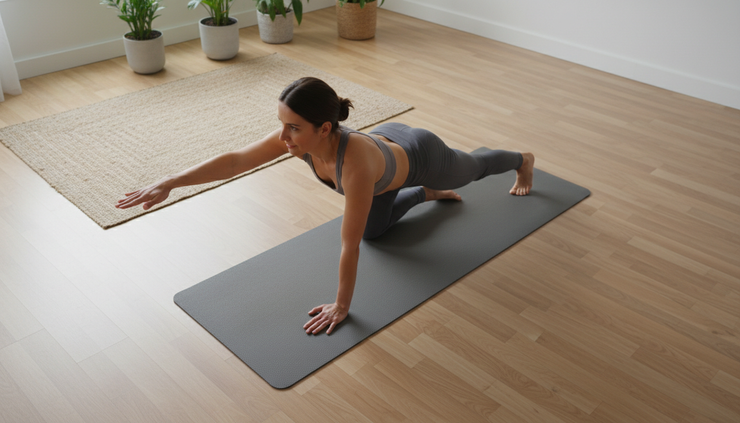
1. Bird dog
Start on hands and knees. Tighten the abdomen gently. Extend one leg backwards. If stable, extend the opposite arm. Keep the hips level.
Hold for 3 to 5 seconds. Do 6 to 10 repetitions each side.
2. Glute bridge
Lie on the back with knees bent. Squeeze the buttocks and lift the hips until the body forms a straight line from shoulders to knees.
Hold briefly, then lower slowly. Do 8 to 12 repetitions.
3. Side plank from knees
Lie on the side with knees bent. Lift the hips while supporting the body on the forearm and knees.
Hold for 10 to 20 seconds each side. Build up gradually.
4. Dead bug
Lie on the back with knees bent and arms pointing up. Tighten the abdomen gently. Slowly lower one heel towards the floor, then return.
Alternate sides for 8 to 10 repetitions.
5. Hip hinge practice
Stand with feet hip-width apart. Place hands on the hips. Push the hips back as if closing a car door with the hips, keeping the spine neutral.
This teaches safer bending for lifting and household work.
A weekly routine after recovery begins
A simple plan may include:
Day | Activity |
3 to 5 days a week | Walking for 20 to 30 minutes |
3 days a week | Core and glute strengthening |
Daily | Gentle mobility and posture breaks |
1 to 2 days a week | Rest or light stretching |
Progress slowly. Add repetitions before adding difficulty. Good form matters more than intensity.
A supportive recovery mindset
Slip disc recovery is rarely a straight line. Pain may improve for a few days, then flare after travel, poor sleep, stress, or heavy activity. That does not always mean damage is increasing. It often means the back needs better pacing.
A few habits help recovery stay on track:
Keep moving within safe limits
Avoid long bed rest
Follow prescribed medicines correctly
Attend physiotherapy sessions as advised
Sleep well and manage stress
Return to lifting and sport gradually
Track symptoms, especially leg pain, numbness, and weakness
The key is not to fear movement, but to respect pain signals. Most backs respond well to steady care, sensible exercise, and daily habits that reduce strain. If symptoms are severe, spreading, or not improving, seek medical help early. The sooner the right plan starts, the easier it is to protect the spine and return to normal life.


टिप्पणियां